
Why Campground Wi-Fi Requires a Different Approach
|
Unlike indoor Wi-Fi systems, campground networks must cover large outdoor areas with obstacles like RVs, trees, buildings, and terrain changes. A single router or indoor access point cannot provide the coverage needed across dozens or hundreds of campsites. A proper campground Wi-Fi installation uses outdoor access points mounted on poles, wireless backhaul links to reach remote areas, and carefully planned coverage zones so guests receive usable internet service across the property. |
Areas typically needing coverage
|
Why Many Campground Wi-Fi Systems Fail
Large Property SizeCampgrounds spread across acres of land require multiple coverage zones and reliable backhaul connections. |
Signal ObstructionsTrees, RVs, cabins, and metal structures block or reflect wireless signals. Use more commercial grade Wi-Fi equipment. |
Remote AreasMany sites are too far from the office for traditional Ethernet cabling. More than a standard Wi-Fi router is required. |
Power at Remote PolesUse NEMA enclosures.to keep you POE injectors, or POE switches safe from moisture and vandalism. |
Growing DemandGuests now expect reliable streaming and work-from-campsite connectivity both outside and inside their RV. |
Future ExpansionNetworks should scale as new campsites or cabins are added, or when service provider speeds increase. |
Typical Campground Wi-Fi Layout
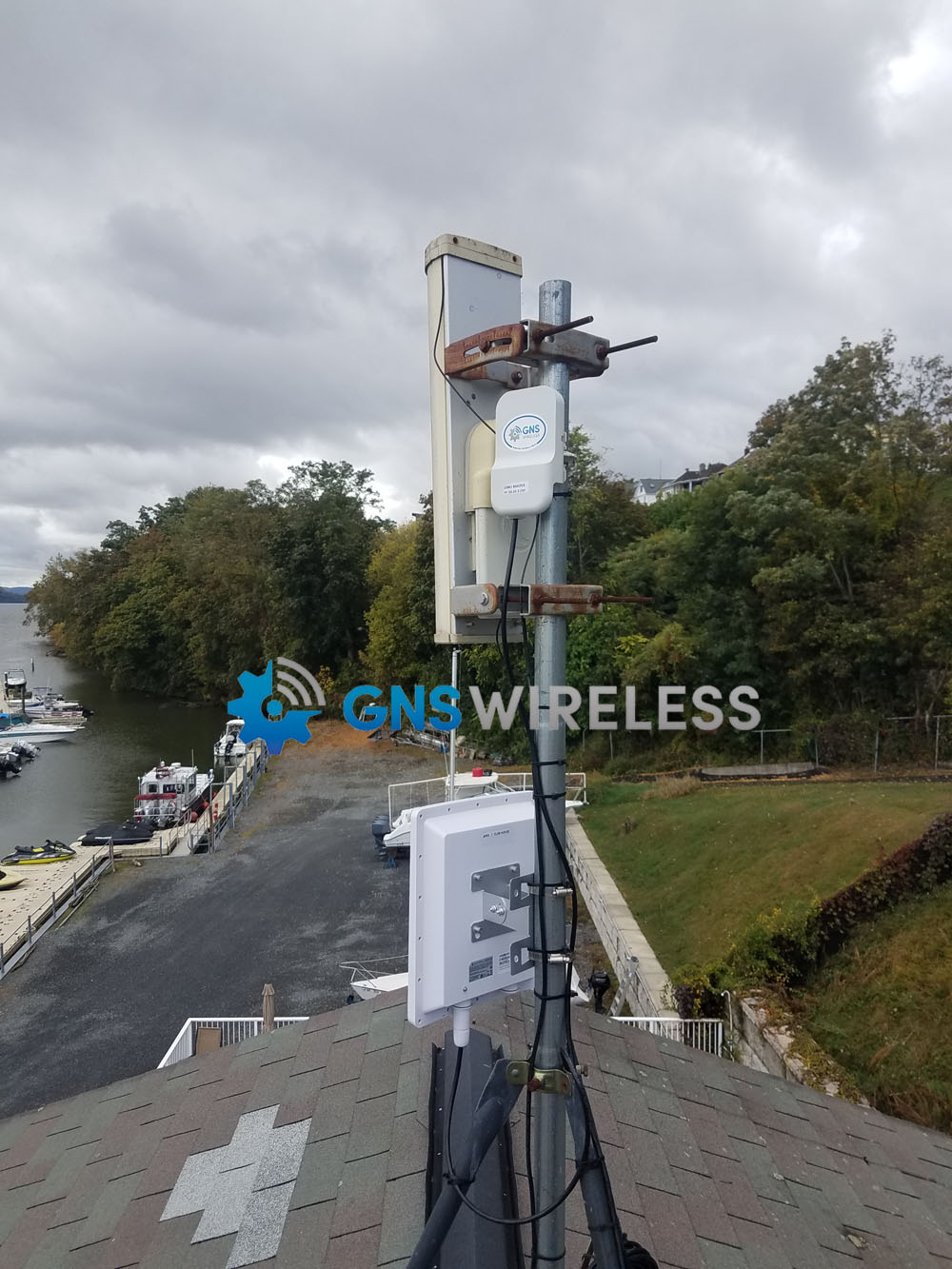
Most campground Wi-Fi installations begin at the main office where the internet service enters the property. From there, wireless backhaul radios distribute connectivity across the campground to remote coverage poles that support outdoor access points.
| MAIN OFFICE ROOFTOP EXAMPLE | REMOTE POLE EXAMPLE |
 |
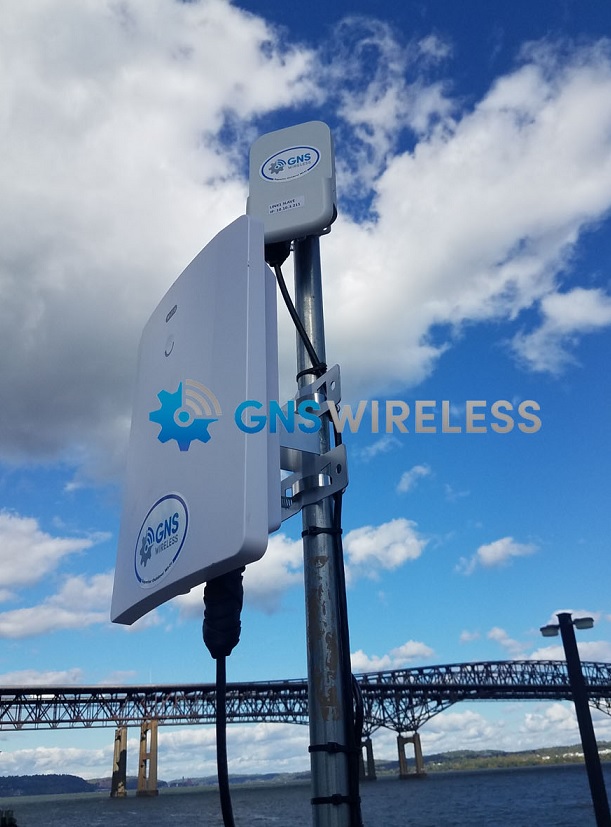 |
Each remote pole typically includes a wireless backhaul radio, outdoor access point, PoE injector, and a weatherproof NEMA enclosure. The pole height is usually between 15–20 feet to help clear obstacles like RVs, trees, and buildings.
Example Campground Wi-Fi Coverage Zones
The number of access points required depends on campground size, terrain, and obstacles such as RVs and trees.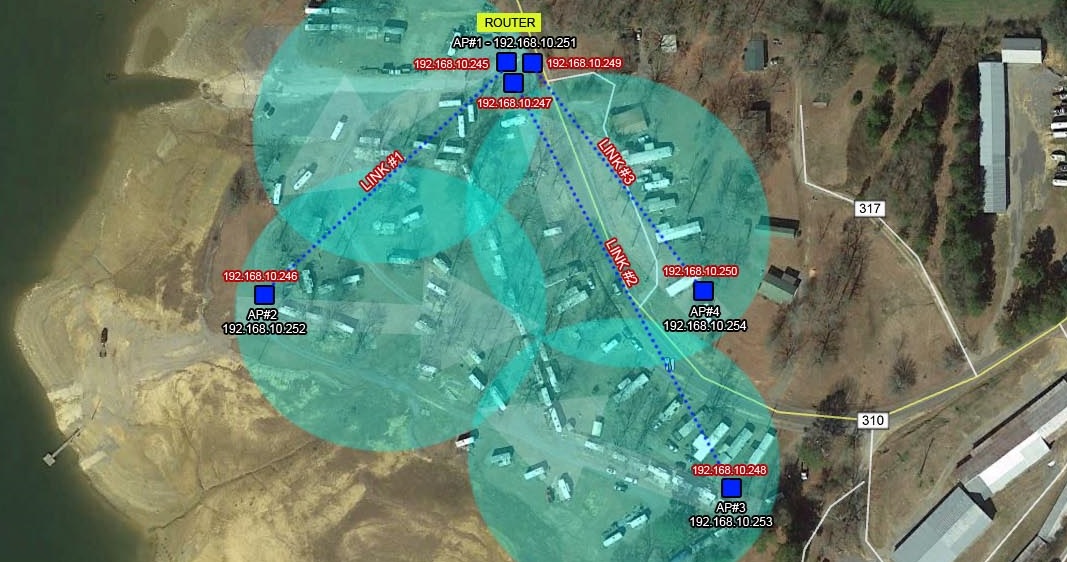
- Small campground (20–40 sites)
1 main distribution point at the office with 2–3 remote coverage poles providing Wi-Fi across the property. - Medium campground (50–100 sites)
1 main office distribution point with 4–8 remote poles using wireless backhaul to deliver coverage across multiple RV rows and common areas. - Large campground (150+ sites)
1 central distribution point with 10–20+ outdoor access points installed across multiple poles and coverage zones throughout the campground.
How Campground Wi-Fi Is Installed
1. Identify the Internet Entry Point
Most campground networks start at the office where the internet connection is available. The service provider modem will connect to a new commercial grade router able to handle the increased amount of devices that will be on your new wireless network. From there, we provide POE capable switches to power the devices on the roof, such as your PTP backhaul antennas, and wireless access points.
2. Map Coverage Areas
Identify which sections of the campground require Wi-Fi service, including RV rows, cabins, stores, pools, and bath houses. We create custom heat maps to give you a visual of potential Wi-Fi coverage, and possible dead spots. Then, we prepare an equipment list and recommendations on how to cover the area with Wi-Fi.
3. Plan Backhaul Links
Wireless bridge radios distribute connectivity from the office to remote poles where outdoor coverage is needed. This method replaces the antiquated method of wireless repeaters, and is a faster version of a wireless mesh system. The PTP backhaul antennas act as an invisible Ethernet cable. This ensures that guests that are connected to the far end of your parks Wi-Fi network will have the same available download speeds, as users connected to the front of the park. The remote poles, cabins, bath houses, maintenance sheds, that have wireless equipment will require power only. There is no need to bury Ethernet cable to the remote locations. Everything is wireless.
4. Install Remote Poles
Poles support outdoor access points and backhaul radios positioned above obstacles like RVs and buildings. Assuming your parks terrain is generally flat, we recommend a pole height of about 12-15ft. This ensures the antennas are just above the roof tops of RVs, and can communicate back to the main office, or to other poles, without obstructions. 110V power is required. Weatherproof enclosures will ensure the network equipment on each pole stays dry.
5. Install Access Points
Outdoor Wi-Fi access points provide coverage for campsites and gathering areas where guests actually use the network. These access points are now dual band, cloud managed, and high power for expansive coverage, and signal penetration into RVs. Your guests want to be able to stream, game, and work…so we recommend installing good quality access points every 300-400ft. Quality Wi-Fi = Happy Campers!
6. Test and Optimize Coverage
The network is tested for weak spots, throughput, and overall coverage so the layout can be refined as needed. Our support staff is available to assist in tweaking, testing, configuration changes, bandwidth settings, IP adjustments, and cloud configuration walk through. We are here to help.
|
Typical Equipment
Hardware Used in Campground Wi-Fi Systems
|
FAQ
Campground Wi-Fi QuestionsHow many access points does a campground need?Small campgrounds may require only a few access points while larger parks may require many outdoor access points and wireless backhaul links. Can Wi-Fi reach remote RV sites?Yes. Wireless bridge links can deliver internet to remote poles without trenching cable across the campground. Can GNS Wireless help design the network?Yes. We assist campground owners with layout planning, equipment recommendations, and system design. |
Start Your Campground Wi-Fi Installation Project
Information that helps
|
Contact GNS WirelessPhone: (877) 209-5152 Email: sales@gnswireless.com |