
What Is an Outdoor Wireless Access Point?
An outdoor access point creates Wi-Fi coverage outside a building. It connects back to your network via a single Cat6 cable or via a point to point wireless bridge, and broadcasts wireless service across outdoor areas where standard indoor routers fail.
Campgrounds
Cover RV sites, cabins, bathhouses, pavilions, registration areas, and common spaces.
Marinas
Provide Wi-Fi coverage to docks, slips, fuel stations, maintenance buildings, and offices.
Farms
Extend outdoor Wi-Fi to barns, equipment yards, livestock areas, and remote property locations.
Industrial Properties
Support outdoor work areas, warehouse yards, parking lots, equipment zones, and loading docks.
Why Outdoor Access Points Outperform Indoor Routers
One of the most common mistakes property owners make is attempting to cover large outdoor areas using an indoor router mounted inside an office, clubhouse, marina building, maintenance shop, or home window.
While indoor routers may provide coverage nearby, they were never designed to deliver reliable Wi-Fi across campgrounds, RV parks, marinas, farms, warehouses, parking lots, or other large outdoor environments.
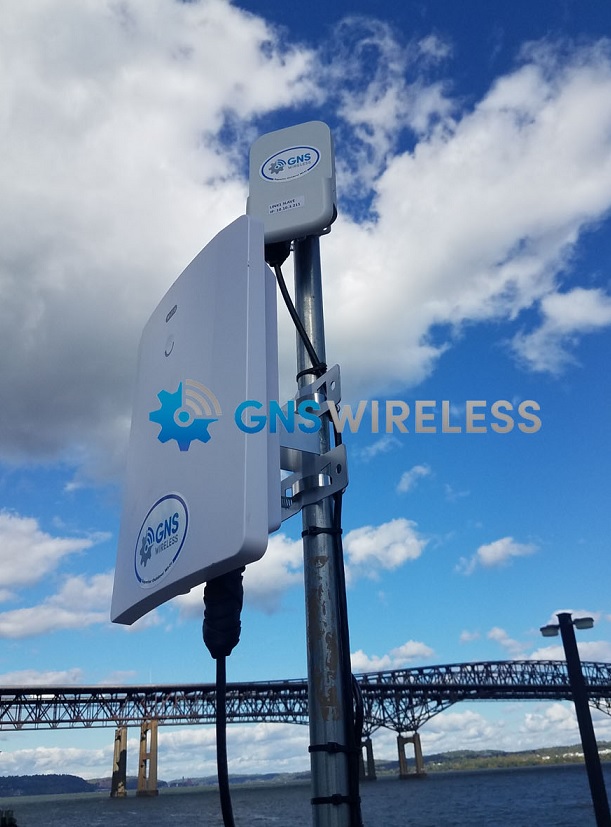
Outdoor wireless access points are purpose-built for these environments. By mounting higher and using weather-resistant enclosures, specialized antennas, and enterprise-grade radios, outdoor APs provide significantly better coverage and capacity where users actually need connectivity.
The installation shown here uses a dedicated outdoor wireless access point mounted above the surrounding RVs and obstructions. This placement allows Wi-Fi to travel farther, reduces interference, and helps provide more consistent coverage throughout the property.
How Far Does an Outdoor Wireless Access Point Reach?
Coverage depends on mounting height, antenna design, obstructions, user density, and the client devices connecting back to the AP.
Small Outdoor Areas
Patios, courtyards, small yards, storefronts, and light outdoor coverage areas. 1 AP Required.
Large Outdoor Coverage
Campgrounds, marina docks, parking lots, warehouse yards, and common areas. 2-3 APs Required. Connect remote APs via MESH or Point to Point Wireless Bridge.
Open Area Designs
Possible in open areas with proper mounting, design, antenna selection, and realistic speed expectations. 5+ APs Required. Connect remote APs via MESH or Point to Point Wireless Bridge.
Outdoor AP vs Indoor AP
| Feature | Outdoor Access Point | Indoor Router / Indoor AP |
|---|---|---|
| Weather Resistance | ✔ Designed for outdoors | ✘ Not recommended |
| Pole or Mast Mounting | ✔ Yes | Limited |
| Outdoor Coverage | ✔ Long range designs available | Limited |
| Campgrounds & Marinas | ✔ Recommended | ✘ Poor fit |
| User Capacity | ✔ Built for many devices | Limited outdoors |
Why Wi-Fi 6 Matters Outdoors
Outdoor Wi-Fi is no longer just for basic browsing. Campground guests stream movies. Marina members work from their boats. Farms connect cameras and monitoring devices. Warehouses rely on handheld scanners and outdoor equipment.
Wi-Fi 6 helps outdoor networks handle more connected devices with better efficiency, lower congestion, and more consistent performance in busy environments.
Phones, tablets, smart TVs, laptops, cameras, sensors, and IoT devices.
Improved performance when multiple users connect at the same time. Bandwidth Control now available to prevent over-usage.
More reliable coverage for real-world outdoor Wi-Fi applications.
Best Outdoor Wireless Access Point by Application
The best outdoor AP depends on coverage area, user count, mounting location, and how the network will be used.
Campgrounds
For RV sites, cabins, bathhouses, and common areas. More trees…more WAPs.
Recommended:
GNS-7664-ELR or XV2-23T
Marinas
For docks, slips, fuel stations, offices, and waterfront coverage. Salt Water Ready.
Recommended:
GNS-7660-ELR
Farms
For barns, equipment yards, outdoor cameras, and remote areas. Long Range Available.
Recommended:
GNS-7664-ELR
Common Outdoor Wi-Fi Design Mistakes
Mounting Too Low
RVs, boats, vehicles, buildings, and trees can block outdoor Wi-Fi signals when APs are mounted too low. Typical mounting height for RV Parks that are flat is 15ft.
Using Too Few APs
One outdoor access point cannot reliably cover an entire campground, marina, farm, or industrial property. For streaming service to be reliable, you need an AP no more than 150ft. away from any guest.
Ignoring Capacity
Coverage and capacity are different. A strong signal does not guarantee enough bandwidth for every user. Use high quality APs, with correct configuration and bandwidth control to manage the wireless network.
Using Indoor Gear Outside
Indoor routers lack the weather protection, mounting options, and outdoor coverage design needed for reliable service. Cheap routers will overload as soon as client devices increase.
How GNS Wireless Designs Outdoor Wi-Fi Networks
We help match the correct outdoor access point to the property, user count, mounting locations, and internet source.
Review Site Layout
We review the property size, buildings, trees, docks, roads, and coverage areas.
Identify Mounting Locations
We look for buildings, poles, rooftops, towers, or masts that improve coverage.
Select Outdoor APs
We recommend the correct outdoor wireless access points for coverage and capacity.
Deploy Reliable Coverage
We help create an outdoor Wi-Fi system built for real-world users and devices.
Outdoor Wireless Access Point FAQs
What is an outdoor wireless access point?
An outdoor wireless access point provides Wi-Fi coverage outside buildings. It connects to your network and broadcasts wireless service across outdoor spaces.
How far does an outdoor AP reach?
Typical real-world coverage may range from 100 to 500+ feet depending on mounting height, obstructions, user devices, antenna design, and the environment.
Can outdoor APs survive rain and snow?
Professional outdoor APs use weather-resistant housings designed for exterior installations, including rain, snow, humidity, wind, and temperature changes.
How many outdoor access points do I need?
The number depends on property size, user count, mounting locations, internet speed, and the level of coverage needed. Large properties usually require multiple APs.
Do I need Wi-Fi 6 outdoors?
Wi-Fi 6 is recommended for busy outdoor networks with many users or connected devices, especially campgrounds, marinas, campuses, and commercial properties.
Need Help Selecting an Outdoor Wireless Access Point?
Every property is different. Send us your property size, user count, internet source, and mounting locations. We’ll help recommend the best outdoor Wi-Fi solution for your application.